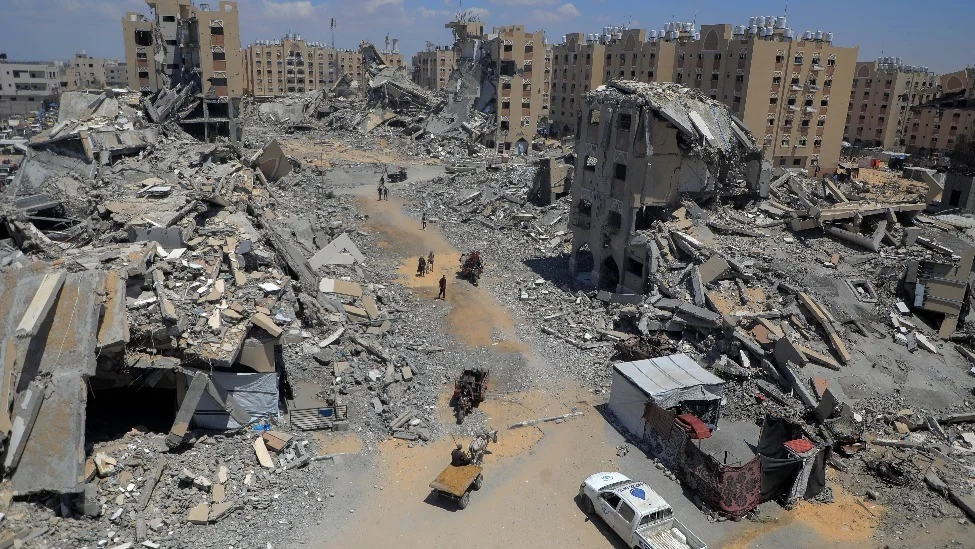
Eighteen days after a ceasefire was reached, Israeli Prime Minister Benjamin Netanyahu instructed the military to launch a forceful strike on the Gaza Strip on the 28th, reigniting the conflict in the region. According to the latest report from AFP, German Foreign Minister Annalena Baerbock expressed "deep concern" over the situation on the 28th and urged Israel to "exercise military restraint." In a statement from the Foreign Ministry, Baerbock said, "We call on Israel to exercise military restraint to avoid further suffering." At the same time, she also called on the Palestinian Islamic Resistance Movement (Hamas) to "fulfill its obligations under the agreement... lay down its arms, and ultimately hand over the remains of all deceased hostages." "With the ceasefire agreement between Israel and Hamas, hope for lasting peace is emerging, and we must continue to work towards it," Baerbock stated. The first phase of the Gaza ceasefire agreement took effect on October 10. However, in recent days, the Netanyahu government and Hamas have accused each other of violating the ceasefire agreement, highlighting the fragility of the agreement. On the evening of October 28, Netanyahu ordered the military to carry out a "forceful strike" on the Gaza Strip, citing Hamas's violation of the ceasefire agreement. Hamas issued a statement the same evening, denying any involvement in the "shooting incident" that occurred in Rafah that day and reaffirming its commitment to the ceasefire agreement. According to media reports, staff at local hospitals in Gaza said on the 29th that Israeli airstrikes overnight had killed at least 60 people, including many children. The Israeli Defense Forces issued a statement on the 29th, stating that after carrying out attacks on relevant targets in the Gaza Strip as instructed, they had resumed implementing the Gaza ceasefire agreement.
 热门排行
热门视频
热门排行
热门视频